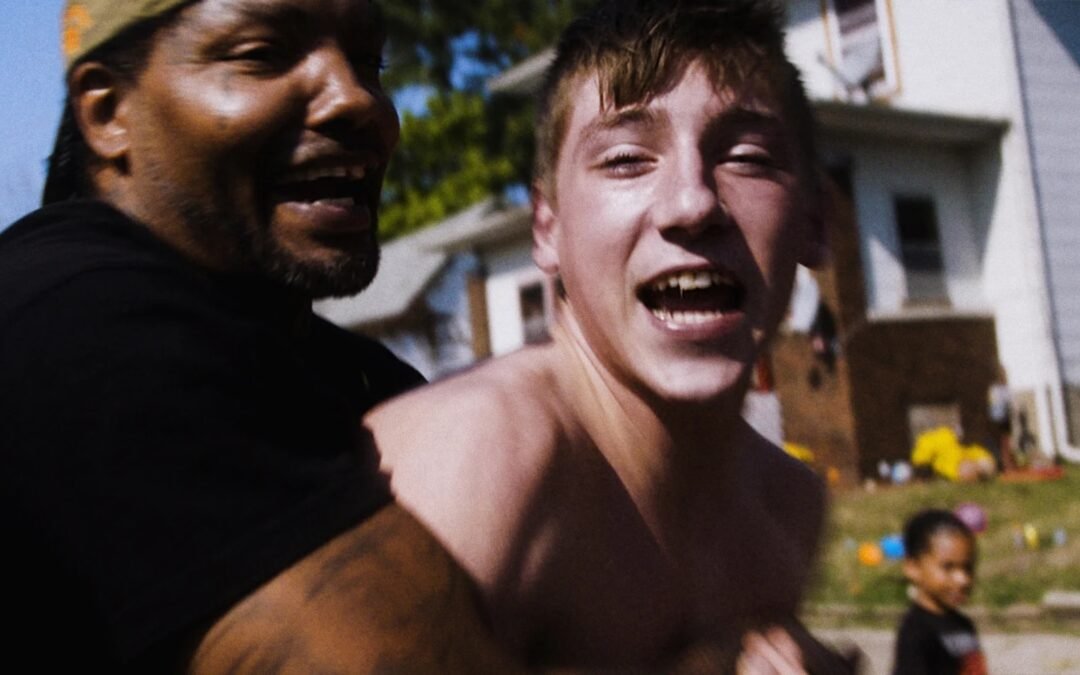
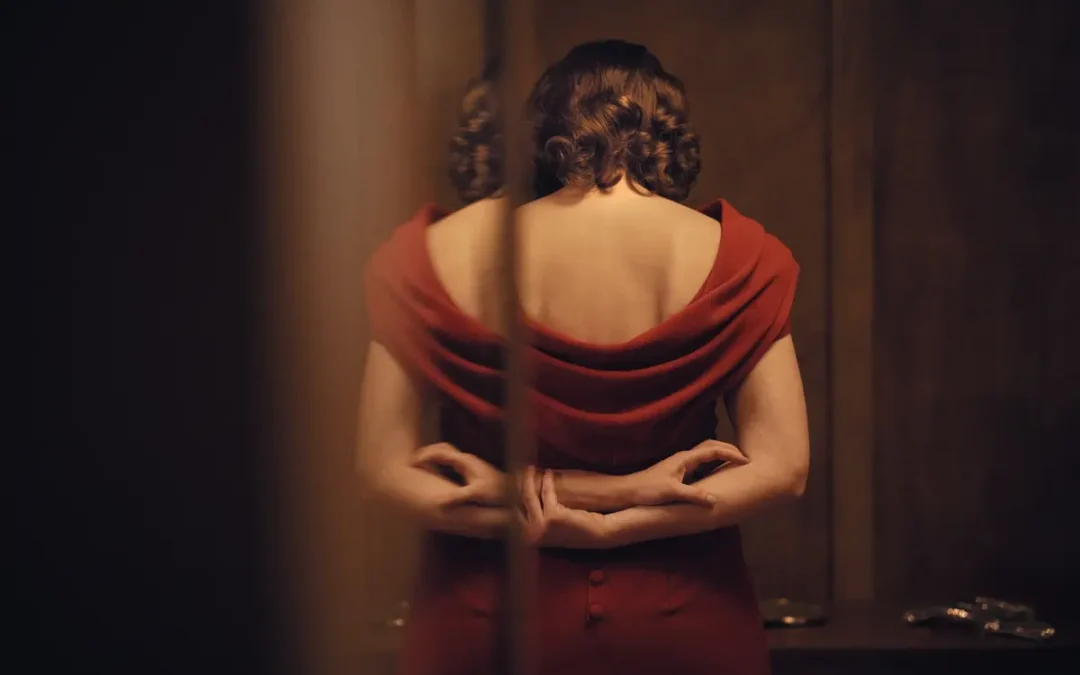
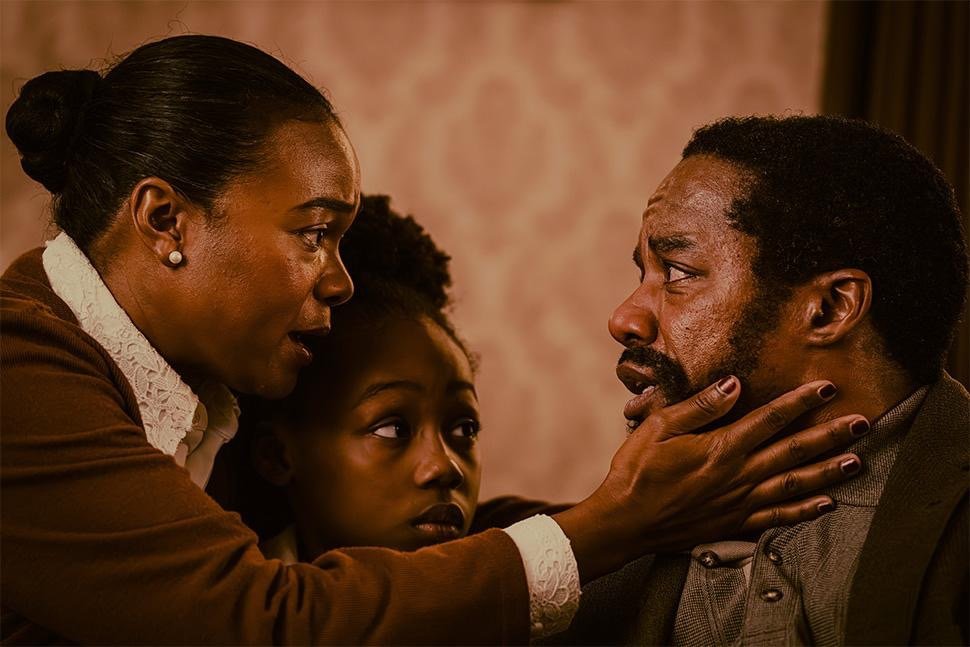
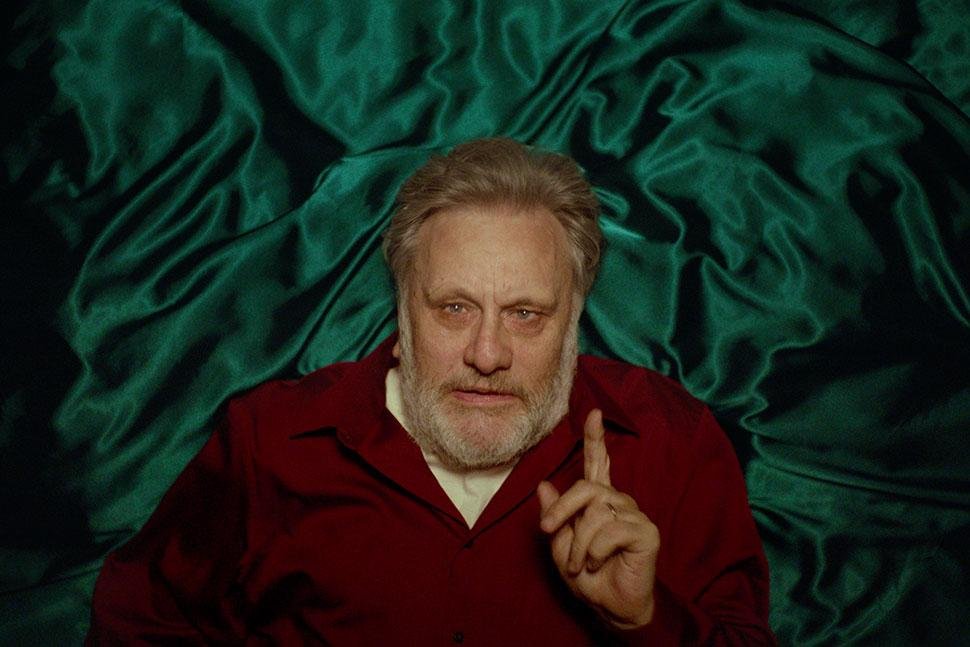
Green Is An Inhuman Color is the first fiction feature film by Oliver Rossol – a 1987 German director and graduate of the University of Art & Design Offenbach – is loosely based on Fedor Dostoevsky’s Crime and Punishment. The story is about a “content moderator”, confronted with the incomprehensibility of hate and spitefulness in the social realms of the internet, decides to stop this overflowing cesspool by an act of violence.
However much the young german director decides to set his narrative in contemporary times – with social media representing its hyperbolic and deeply realistic emblem – , the existential questions, moral doubts, and ethical choices the characters undertake are very much in assonance with the book written in 1866 by Dostoevskij‘s genius.
«Suffering, pain are the inevitable duty of a generous conscience and a deep heart. Truly great men, I believe, must feel on this earth a great sadness»
(Fedor Dostoevskij, Crime and Punishment, 1866)

However, surmounted by moral and existential doubts, violence as an answer to the dramas of contemporary society seems to be a solution that transcends the various historical eras, both in fiction and reality. It was so for Travis of Taxi Driver as it was for political terrorism. Society has made the individual psychotic, and psychosis will spill over into society. But what effect will that have? Who will really be affected? Is it worth it?
Oliver Rossol touches on the elements that best represent the contemporary, our society of the spectacle – Guy Debord would say -, but what will happen?
Just as the questions transcend eras, so do the answers, which change narratives depending on historical time. Now, all that is undertaken by Oliver Rossol in his Green Is An Inhuman Color, what will be its answers?
Tell us about the creative process in the making of your film.
OLIVER ROSSOL
Today technology is enabling new ways how to make a film.
As writer, director, director of photography and editor I can work like a painter in front of his canvas. The creative freedom is not cut by schedules, budget or time. Maybe the painting needs some time, so you can slide the canvas under your bed and wait until it calls you.
While shooting the scenes I told my actor Alexej Lochmann that we are creating puzzle pieces for me to figure out in the process of editing. The same goes with the music: Niklas Kraft, the composer of the score worked over the whole course of the editing process on a way to frame the whole dramatic structure of the film; the music is an indispensable element of this work. Another “challenge“ in the creative process was the fact that there was no direct Inspiration for the style of the movie. It’s an experiment in filmmaking.

What were your cultural, literary, musical, film and philosophical influences in general and for this specific work?
OLIVER ROSSOL
I still remember the first moving Image I experienced as a toddler: lying in a stroller, looking up into the treetops moving by – an ever-changing abstraction of nature. And as a child of the 90s I also grew up with MTV and music videos – a very visceral and energetic way of experiencing moving pictures.
So, I was always drawn to a kinetic style of cinema. I guess the peak in this style was reached with Natural Born Killers by Oliver Stone. The mix of all the different techniques, the editing, and the bold decision to go all in, always impressed me – and it was a great way to learn a lot of different things about filmmaking in a very condensed time.
When talking about the topics and philosophical influences that interest me I always end up contemplating about moral systems in society. What is good, what is evil? Or is everything a blurry gray chaotic system. Existential questions in a stoic mindset.
So everyone writing, singing or painting about this is right up my alley.
For this specific work Crime and Punishment by Fyodor Dostoevsky was the initial spark.
A person who is so much convinced to have the moral high ground that murder is considered an act of fixing the world.
This hubris is a great starting point for a modern take of that story. How is it possible to “filter“ content on social media, instead of erasing the comment, could “erasing“ the commentator solve the problem?
«Pure psychic automatism with which one proposes to express, whether verbally, in writing, or in any other way, the actual functioning of thought. Dictation of thought, in the absence of any control exercised by reason, outside of any aesthetic or moral concern» (André Breton, Surrealist Manifesto, 1924)
What do you think of this statement? Do you think it might have something to do with your work or your creative process?
OLIVER ROSSOL
Often the cinema is described as a “shared dream”: a group of people sitting in a dark room are experiencing the same story.
It’s a dream in the sense what André Breton is describing: the movie should best be like a pure psychic automatism that ends when we wake up from the Dream – when we leave the cinema – then reality with all its reason will kick in.
I am convinced that there are also movies that are “shared nightmares”; and I don’t refer to horror movies. Stories without moral concern that are grounded in the dark and forbidden regions of society help us to describe and understand real world problems – by creating an opposing nightmare in a movie, we can wake up through exiting the cinema – but we also carry something – like a thought or impression – back into the real world.
The artist is expressing and the viewer is defining.

What do you think a viewer might first perceive and then think in front of your film?
OLIVER ROSSOL
The only part of the film which is directly linked to the viewers perception is the first scene.
A long and painful recitation of inappropriate Internet comments. A lot of them are simple and dumb comments. An element of realism that everyone of our modern age can relate to; but it’s also staged like an incantation of evil.
Do you consider your film cinema or video art? Where do you draw the line? Where do you find more freedom of expression? Is a definition really necessary in these visual arts?
OLIVER ROSSOL
I consider my film as a work for the Cinema. First of all the aspect Ratio is cinemascope, so there is a formal and aesthetic decision for the big screen.
But it’s also meant to be experienced with other People sitting together with all the conventions of the Cinema. Green is an Inhuman Colour is still telling a story that is straightforward in its structure. Our techniques are advancing at a fast rate – VR, Virtual Production, but I think there is still a lot to discover artistically for the language of cinema even if you’re just using a plain 2D 2.39:1 cinema frame. This film is made in the tradition of telling a story in the way only the moving picture can.
What are your next projects?
OLIVER ROSSOL
I also worked as a Director of Photography on a lithuanian film directed by Nikolas Darnstädt, which is an adaption of Franz Kafkas The Castle this movie is also on its festival round.
For my next movie: the main topic will be “death“ and “Memento mori“.